%20cropped%201024px.jpeg)
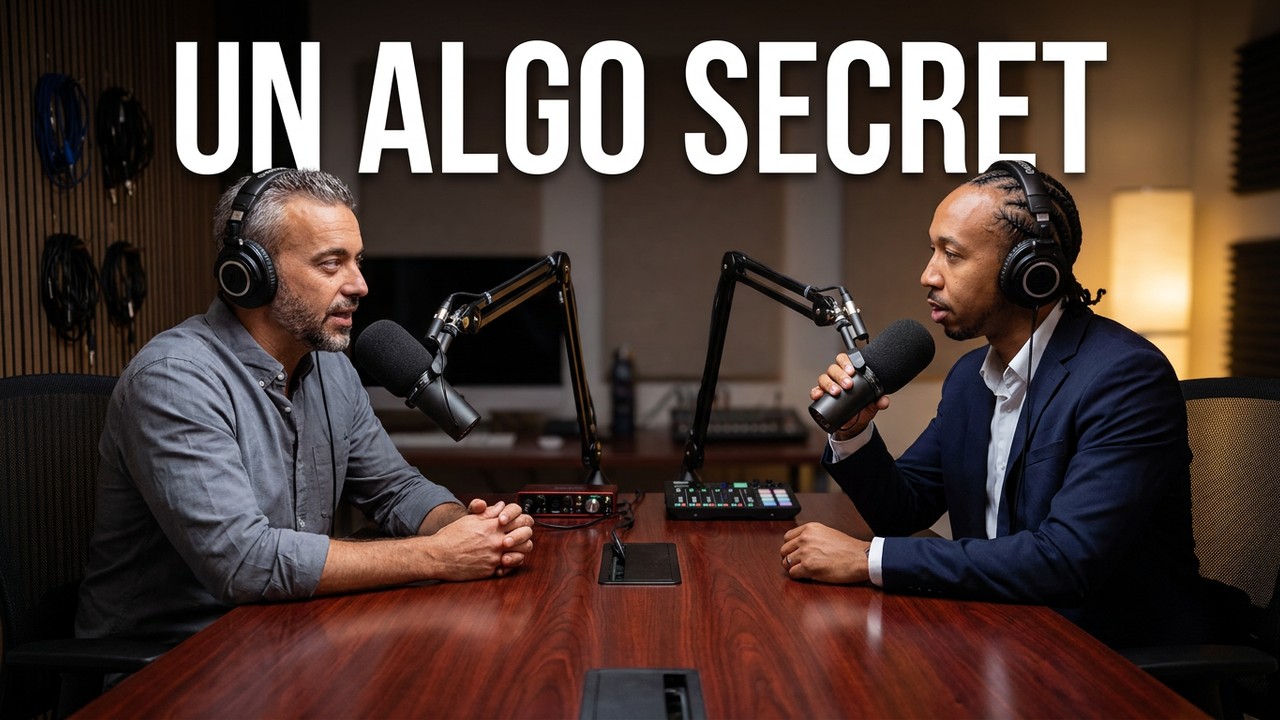
I’m sharing here a podcast interview with the host from the Entrepreneur in Action podcast. In this conversation we dive into the journey behind OneTake AI, the challenges of building AI software for entrepreneurs, and the lessons I learned from earlier businesses along the way. We also talk about marketing strategies, pricing decisions, fitness, fatherhood, and how all of these experiences shape how I build companies today.
If you want to experience the technology we discuss in the interview, you can Try OneTake AI for free.
Below the video, I’m also sharing a written article that recaps many of the key ideas from the conversation, including the strategies that helped me grow businesses and some of the painful lessons that shaped my thinking as an entrepreneur.
What you will learn today
- Why I created OneTake AI and the problem it solves for entrepreneurs
- How my earlier businesses shaped my approach to building technology
- The strategy I used to grow OneTake AI from zero to thousands of users
- Why I prefer pre-selling software before building it fully
- The pricing strategy that helped the company grow sustainably
- The “Rule of Zero” and how it can radically reduce business costs
- How AI can become more than a tool and eventually act like a business partner
- The lessons entrepreneurship taught me about fitness, discipline, and fatherhood
Below is a deeper look at some of the ideas and stories I shared in the interview.
Introduction: Embracing the Entrepreneurial Spirit
Why I Chose This Path
Entrepreneurship has always been about freedom for me.
I like building things. I like solving problems. And most importantly, I like creating tools that allow other entrepreneurs to grow their businesses.
Before building software, I had already spent many years working with entrepreneurs around the world. Through my previous organization, the Free Entrepreneurs Movement, we coached more than 300,000 entrepreneurs in 41 countries to start and grow their businesses.
During that time, I noticed a pattern.
Many entrepreneurs had incredible knowledge. They were great coaches, consultants, speakers, or authors. They had expertise that could genuinely help people.
But they struggled with one specific technical problem.
Sharing that expertise online through video content.
The Drive Behind OneTake AI
If you want people to discover your product today, you need to publish content.
You might create long-form videos on YouTube.
You might create short videos for TikTok or Instagram.
You might extract the audio and publish it as a podcast.
But while the platforms make distribution easy, video editing is still extremely painful.
Most entrepreneurs were editing their videos themselves using software like Adobe Premiere, Sony Vegas, or Filmora and the reality was brutal. Many of them would spend 10 hours editing a single video. So they would make one video… and then never want to do it again.
That’s where the idea for OneTake AI came from.
I started asking a simple question.
What if you could hire an AI as if it were a freelancer video editor?
You record your raw video. You make mistakes. You say “um” and “ah.” You pause to think.
And then the AI cleans everything up automatically.
That’s exactly what OneTake AI does.
You upload your raw video and the system:
- Removes hesitations and awkward silences
- Removes mistakes when you repeat a sentence
- Improves audio quality and removes background noise
- Generates custom music for the video
- Produces a polished final video
All of that happens with a single click.
Early Days: Lessons from Initial Ventures
Experimenting with Ideas
Before OneTake AI, I had already built several businesses.
One of the most interesting ones was a Latin dance school.
At first glance, salsa dancing might seem completely unrelated to technology or entrepreneurship. But it actually taught me a huge amount about building communities and creating experiences people want to come back to.
When I started the dance school, I applied a principle that later influenced how I think about businesses today.
Instead of renting a venue which would have been my biggest expense I partnered with a bar.
I brought all my students to the bar for the classes.
The bar became full of people thanks to my classes, and in exchange I didn’t have to pay rent.
Within a year we had 150 students.
This kind of creative thinking about costs later evolved into something I call the Rule of Zero.
Finding My Passion
Running the salsa school also taught me something important about entrepreneurship.
Businesses are not just about transactions.
They are about communities.
People came to dance classes not only to learn salsa. They came to meet people, build friendships, and be part of something fun.
That understanding of community later influenced how I built my coaching business and eventually how I approached building software for entrepreneurs.
Strategic Growth: Adapting to New Challenges
Scaling Beyond Limits
Through the Free Entrepreneurs Movement, we worked with entrepreneurs in 41 different countries.
As our coaching programs grew, we noticed that many entrepreneurs had the same challenges regardless of where they lived.
They knew their subject.
They could teach it well.
But they struggled to turn that expertise into consistent online content.
When COVID happened, our coaching programs expanded rapidly.
More entrepreneurs were trying to build businesses online. And again and again the same obstacle appeared.
Video editing.
That observation eventually became the seed that grew into OneTake AI.
The Importance of Pivoting
When I first started talking about OneTake AI in 2021, people were skeptical.
Remember, this was before the AI boom.
ChatGPT did not exist yet.
So when I said “AI will edit your videos automatically,” people assumed something strange was happening behind the scenes.
Some even asked me if I was secretly hiring a team of people in another country to edit their videos manually. But I kept going.
In the first year, we went from zero users to about 100 businesses using the product.
Then something interesting happened. At the end of 2022, ChatGPT was released.
Suddenly everyone became interested in AI.
And our growth accelerated dramatically.
We went from:
- 100 users to 400 users in the next year
- Then 400 to more than 3,000 users
By the end of that year we expected to reach around 4,000 businesses using OneTake AI.
AI-Powered Innovation: The Birth of OneTake AI
Identifying a Market Need
One of the biggest mistakes many startups make is building products in secret.
They work for years without talking to customers.
Then they launch something and hope people will buy it.
I wanted to avoid that mistake.
So instead of building the entire product first, I pre-sold the idea.
I already had an audience from my previous business, and those entrepreneurs were exactly the people who needed this solution.
In January 2022 I showed them a prototype demo.
It was not real software yet. There was no login system. No saved projects. No multiple accounts. But it demonstrated the core concept.
I told them:
“This is the software we’re building. If you want it, you can pre-order it today. It will be ready on April 1st.”
That gave me three months to turn the prototype into real software.
But most importantly, it proved that customers actually wanted the product.
Developing the Technology
Building the technology required solving several technical challenges.
Video editing with AI involves enormous amounts of data
You have to deal with:
- Large video uploads
- File storage
- Heavy computing power for processing videos
Those three things can easily become the biggest expenses in the entire business.
So from the very beginning I designed the product around a principle I learned from one of the founders of Skype.
Marketing and Sales: Strategies for Business Expansion
Pre-sales Success
Pre-selling the software turned out to be a very powerful strategy.
It allowed us to validate the idea quickly and start building a community of early users who were excited about the product.
Instead of launching quietly after years of development, we involved our future customers from the very beginning. That created momentum.
Collaborative Partnerships
Another important principle that shaped the business is what I call the Rule of Zero. The idea is simple.
In every business there are one or two costs that represent the majority of your expenses.
Most entrepreneurs try to reduce those costs by five or ten percent.
But the Rule of Zero says something different.
Instead of reducing the cost slightly, try to make it zero.
For example, Skype originally had zero server costs.
Users connected directly to each other. And if your computer was idle, it would temporarily act as a server for other users.
That clever architecture saved them millions.
I applied similar thinking in several businesses.
For example, when organizing large events for entrepreneurs, I wanted to give every attendee a gift. But buying books for 800 people would have cost around $16,000.
Instead of paying that cost, I partnered with a publishing company.
They became a sponsor of the event. They got a booth and a speaking slot. And in exchange they provided books for all attendees.
It became a win-win partnership.
Personal Growth along the Entrepreneurial Journey
Balancing Business and Fitness
Entrepreneurship demands discipline.
For me, fitness became an important way to maintain that discipline.
Training regularly, following structured routines, and applying principles like progressive overload taught me something interesting.
The same principles apply in business.
Small consistent improvements lead to long-term transformation.
Life Lessons from Parenthood
Becoming a father also changed how I think about business.
Suddenly success was not only about growth or revenue.
It was about building a life where family and work could coexist.
Entrepreneurs often underestimate how much their personal lives influence their professional decisions.
Parenthood forced me to become more intentional about time, priorities, and long-term vision.
The Future Vision: Where OneTake AI is Headed
Proactive AI Solutions
Right now, most AI tools behave like tools.
You click a button and they perform a specific task.
The next level is what I call agents.
You give them a mission and they perform the entire job, like OneTake AI editing a full video automatically. But the future goes even further.
I believe AI will eventually become proactive.
Instead of waiting for instructions, it will analyze your business and propose actions.
For example, imagine an AI that spends the night analyzing your content and then suggests:
- New product ideas
- New videos to create
- Marketing opportunities
- Partnerships you should pursue
It becomes less like a tool and more like a business partner.
Personal Goals
My vision for OneTake AI is to build systems that help entrepreneurs grow faster while reducing the technical complexity that slows them down.
Entrepreneurs should spend their time sharing ideas and building relationships, not struggling with software.
If AI can remove those barriers, millions of people will be able to share their expertise with the world.
Conclusion: Reflecting on Success and Legacy
A Vision for Fellow Entrepreneurs
Entrepreneurship is not about avoiding challenges.
It is about embracing them.
Every business I built taught me something new, from salsa dancing to coaching entrepreneurs to building AI software.
The common thread across all those experiences is experimentation.
You try ideas. You learn from mistakes.You adapt.
And slowly, over time, those experiments turn into breakthroughs.
Final Thoughts
If there is one message I hope entrepreneurs take from this conversation, it is this:
Build things that solve real problems.
Listen carefully to your customers.
Be creative about costs and never stop experimenting.
If you want to experience the technology we discussed in this interview, you can Try OneTake AI for free and see how AI can transform the way you create content for your business.