%20cropped%201024px.jpeg)
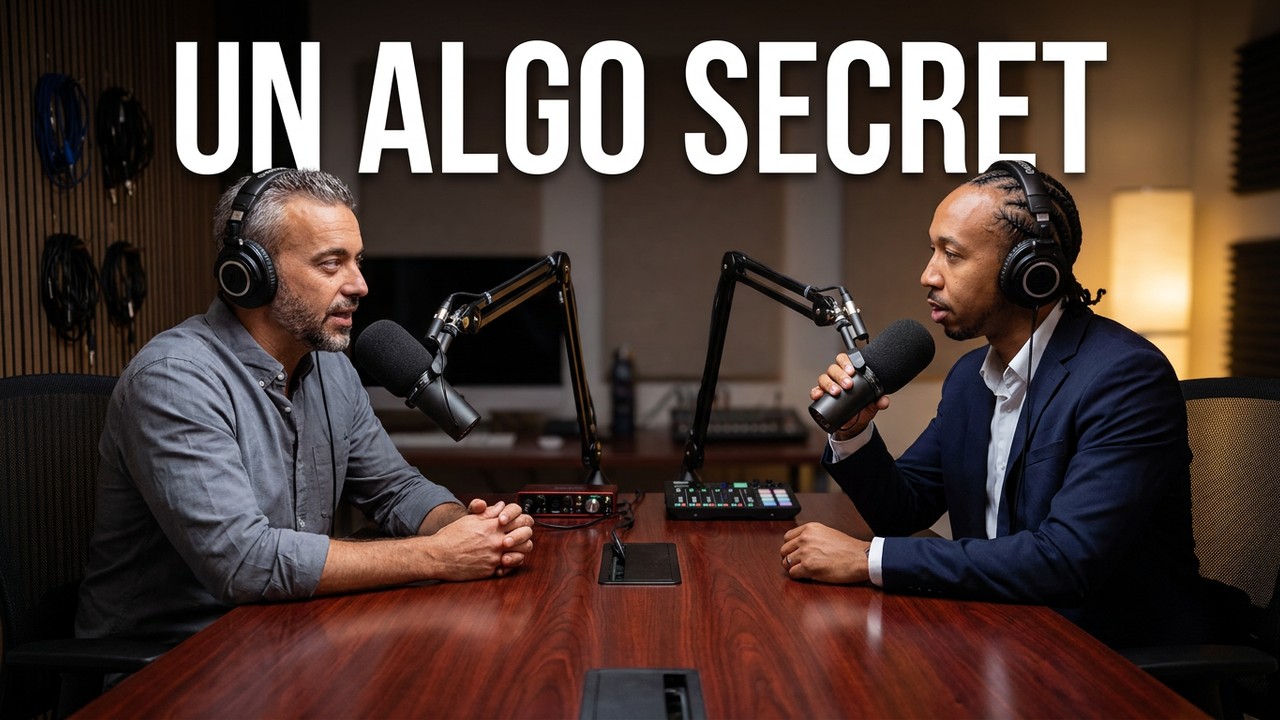
I’m sharing here a podcast interview with Sunny, from The Sunny Ray Show. Watch the full video here.
In this conversation, we talked about my journey from growing up in the French Caribbean, to becoming an engineer, to launching a salsa school, building a dating coaching company, coaching 300,000 entrepreneurs worldwide, and eventually founding OneTake AI. We explored entrepreneurship, failure, AI, creativity, introversion, and why I believe technology should enhance humans, not replace them.
Try OneTake AI for free: https://www.onetake.ai/pricing
Below the video, I’m also providing an article that recaps the main lessons from the interview, including the success strategies and painful failure stories I shared in detail.
What you will learn today
- Why getting your “dream job” can be the worst thing that happens to you
- How I went from one salsa student to 150 in a few months
- The PRINCE method and what it taught me about business positioning
- Why introverts can have an unfair advantage in entrepreneurship
- The painful 12-hour video editing sprints that led to OneTake AI
- The “impossible” feature request that changed our entire product vision
- Why we chose not to replace humans with AI
- How to fail forward and turn frustration into innovation
Below is a deeper look into the ideas and experiences I shared.
My Entrepreneurial Melody
Setting the stage with a brief introduction to my journey
I grew up in the French Caribbean, in a family where computers were not just machines, but portals to creativity. My father was an engineer back when programming meant using perforated cards. He passed on to us the belief that technology unlocks potential.
When I was 11, I took a career assessment test. It said I should become a computer scientist. So I decided that was my path. I loved computers. I loved the internet.
In 1999, while still in high school, I built a website for my school. It got so much attention that I was invited to meet French President Jacques Chirac on Bastille Day. That moment made me think, “The internet is powerful.”
I followed the traditional path. I went through the French equivalent of the Ivy League, graduated as an engineer, and got hired with the salary and role I had dreamed about for nine years.
And within four weeks, I was miserable.
My innate desire to innovate and transform ideas into reality
There is something deeply painful about getting everything you thought you wanted… and realizing it’s wrong.
I was waking up before sunrise, going to work under artificial lights, being one of thousands of anonymous engineers. I knew I couldn’t live that life.
If you can’t find a company you want to work for, you create your own.
That decision changed everything.
Breaking Ground: The Initial Steps
Starting with a passion-driven salsa school
My first venture had nothing to do with computers. I went to study salsa dancing and opened a salsa school.
I started with one student.
Within a few months, I had 150 students and I was the only teacher.
It wasn’t just about dance. It was about energy, community, and helping people feel confident.
Transitioning to a dating coaching company, the first in the French-speaking world
Then I launched the first dating coaching company in the French-speaking world.
It became well known in France. I wrote a bestselling book. I appeared on television. I coached thousands of people to meet the love of their life.
People often ask me what I learned from that.
I created something called the PRINCE method. It was trademarked in France. Each letter represents a step. But what’s interesting is that the first lessons weren’t about charm or clever lines. They were about preparation and positioning.
Most people, especially introverts, don’t create environments where opportunities naturally come to them.
That applies to dating.
It applies even more to business.
Growing Pains & Gains: Lessons from Balancing Multiple Ventures
Discussing my ventures like the Free Entrepreneurs Movement and music website
After helping thousands in dating, entrepreneurs started asking me to coach them in business.
That led to the Free Entrepreneurs Movement.
For more than a decade, we coached 300,000 entrepreneurs in 41 countries. We helped them launch and grow businesses that were unconventional and freedom-based.
I also experimented with online education early. I started selling online courses in 2009, when that was still new.
Experiments with Google AdSense and SEO strategies
I’ve tried many things over the years. Websites. SEO. Monetization strategies. Content marketing. Launches. Funnels.
Some worked. Some failed.
But every experiment taught me something.
Understanding the importance of incremental growth and adjustment
Entrepreneurship is not one big leap. It’s constant calibration.
You launch something. You observe. You adjust. And you repeat.
Overcoming Mistakes: Failing Forward
Trusting early partner and product decisions
Failure is part of the process.
With OneTake AI, our first version reduced video editing from 12 hours of work per hour of footage to 45 minutes.
I was thrilled.
Then a client called me and said, “That’s great. But I don’t want to work 45 minutes either. I want to upload the video, click one button, and be done.”
I told him it was impossible. He said, “I know. That’s what I want.”
That conversation annoyed me. But it changed everything.
Learning from past errors in initial startups
In earlier ventures, I had made the mistake of optimizing what was possible instead of reimagining what was necessary.
This time, we chose the harder path.
If it’s impossible and we make it possible, that’s our edge.
Key takeaways and reflection: "Failing is part of the learning process."
Failing is part of the learning process.
Every painful sprint, like editing video for 12 hours straight, was preparing me to solve a bigger problem.
The Power of Networking & Mentorship
Learning from industry peers like Bill O'Hanlon
I’ve written 11 books. And I blame Bill O’Hanlon for that.
Bill was one of the earliest students of Milton Erickson. He wrote one book per year starting in the 1980s. One day he told me, “Your first really good book will be your tenth or eleventh.”
At the time, I was on book four. But he was right.
My 11th book, Profession: Entrepreneur Libre, was my masterpiece.
Sometimes you need someone ahead of you to tell you the uncomfortable truth.
The significance of seeking guidance and leveraging others' experiences
Mentorship compresses time.
The same happened with OneTake AI. Collaborating with experts in editing methodology and working with a co-founder who had experience inside a $100M video editing company allowed us to think differently.
We didn’t want to add more buttons. We wanted fewer.
Thriving in the Digital Age: Creating Online Content
Transitioning into content marketing and video creation
Writing was powerful, but video was easier for me.
Speaking ideas felt natural. Editing them did not.
For 10 years, I used a scientifically proven editing method to increase retention and emotional impact in videos. But the editing process was brutal.
That frustration led to a question during COVID: what if I built software for myself?
Innovations with OneTake AI and its role in simplifying processes
We started working on OneTake AI in early 2021, before ChatGPT existed.
Back then, when you said “AI,” people thought of Terminator.
Today, AI is everywhere. But most AI video startups try to replace you with an avatar.
We chose a contrarian stance. We don’t replace you. We enhance you.
You upload raw footage—ums, ahs, hesitations, barking dogs—and OneTake AI:
- Removes background noise
- Removes stutters and long silences
- Adds transitions and titles
- Composes music based on your content
- Translates your voice into multiple languages
- Generates shorts
And you don’t click a hundred buttons.
You upload. It works. That’s the experience.
If you want to experience it yourself, try OneTake AI for free: https://www.onetake.ai/pricing
Reflecting on Resilience: Personal Growth through Business Challenges
Insights from coaching 300,000 entrepreneurs globally
Coaching entrepreneurs in 41 countries taught me something profound.
People come for content. They stay for relationship.
That’s why I believe human-centric AI is the future.
Navigating various industries and maintaining enthusiasm
From salsa to dating advice to entrepreneurship to AI, the industries changed.
The mission didn’t.
I want to help people express themselves more powerfully.
As an introvert, I learned that you don’t need to push your way into every room.
You create something remarkable enough that people come to you.
That’s true in dating. It’s true in fundraising. It’s true in product design.
Encore, the Future Awaits
Entrepreneurship is cyclical. You think you’ve reached the final act. And then a new idea appears.
AI is going to reshape how we work and communicate. But I believe deeply that humans will remain at the center.
We want to contribute. We want to speak. We want to connect.
If you are an entrepreneur, especially one who feels frustrated by technical barriers, know this:
Your job is not to become a video editor.
Your job is to share your expertise.
Fail. Adjust. Build. Try again. And keep dancing.
Because sometimes, the path from salsa to AI is exactly the melody you were meant to follow.